Table Of Content
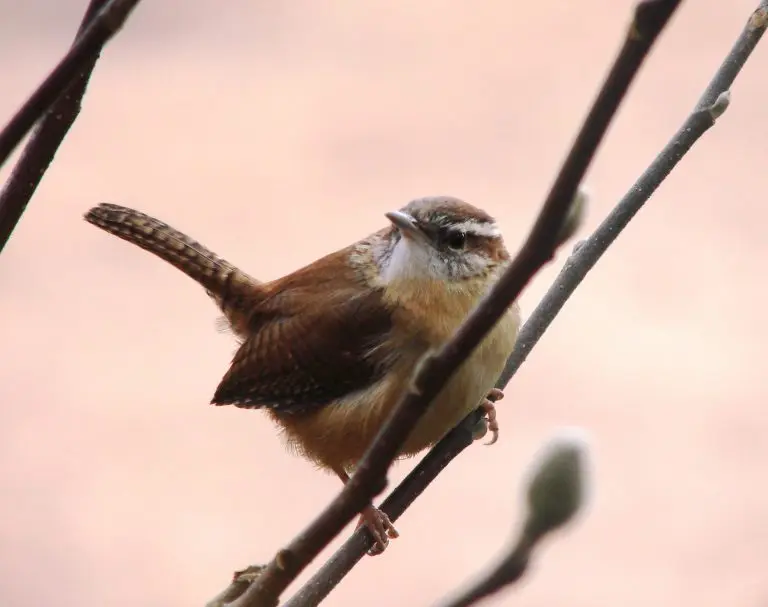
To ensure that a wren uses your birdhouse, it’s best to keep your distance. The best wren bird house has a hole small enough for a wren to enter and no other bird species, such as sparrows. It must be small enough to keep the eggs nice and warm, and the landing surface must be at least 4 inches below the entry hole.
Have A Great Story About Wrens Around Your Home?
The females and juveniles look the same as the adult male, although recent fledglings are noticeably smaller. In turn, a female House Wren may raise a second brood with a new mate, leaving the young from her first clutch for the male to raise. House Wrens typically raise two broods per season — quite often with different mates. These little birds are quite active, and spend most of their day foraging for food. They flit from branch to branch, or hop along the ground while searching in low shrubbery for insects. In zoos, these birds live in large enclosures or aviaries, usually with a variety of other species.
Should I Clean The Birdhouse Between Broods?

They are beautiful birds with their distinctive bright white eyebrow, brown spotted belly, and a brown and white streaked back. These birds are hard to spot in the dense reeds in the habitats in which they live. You probably will have much better luck listening for them. Their songs typically consist of several introductory notes, then a trill of repeated syllables, and then a few concluding notes.
Nesting
There are a few accepted records of House Wrens in southeastern Washington in the winter, but they were living in heated stock sheds. This species is the most common wren in North America, present throughout most of the continent during summer. Look for these wrens foraging for insects in low tree branches, shrubs and brush piles in backyards, parks and open woods. The more places there are for insects to hide, the better the habitat is for house wrens. Consider putting up a nest box to attract a breeding pair. Attach a guard to keep predators from raiding eggs and young.
Migration & Range Maps
They are members of the Troglodytidae family, along with over 80 different species of wrens. A "brown-throated" subspecies of the House Wren occurs in mountains of extreme southeastern Arizona. It has a distinct buffy eyebrow and cinnamon-buff throat and chest.
✔ Make sure they have access to food and water
For the Birds: Three wrens bring three different personalities - Courier & Press
For the Birds: Three wrens bring three different personalities.
Posted: Sun, 25 Oct 2020 07:00:00 GMT [source]
An unstoppable waterfall of notes spills from the throat of the tiny, indefatigable house wren, one of our most beloved backyard birds. What house wrens lack in appearance they make up for with their songs. In fact, it’s not uncommon for male house wrens to sing nine to 11 times per minute during breeding season. Wrens often nest close to people, so you’re likely to hear them this spring. Listen for their boisterous melodies during the summer season.
The downside to their shared spaces is that house wrens will not share. They are highly territorial birds and often rip out bluebird nests in favor of their nests. The floor of your nesting box must be at least 3 inches below the entry hole.
Compare with Similar Species
Do Wrens Migrate: When Will House Wrens Return? - Birds & Blooms
Do Wrens Migrate: When Will House Wrens Return?.
Posted: Mon, 07 Mar 2022 08:00:00 GMT [source]
Even though they almost never visit bird feeders, they are often seen zipping through backyards while hunting insects. A great way to draw these wrens to your yard is to create brush piles, which offer cover for them and places for insects to gather. Having wrens visiting your backyard lets you listen to their beautiful singing and watch these energetic birds up close. However, only a few species of wren regularly visit backyards, including House Wrens, Carolina Wrens, and Berwick Wrens.
Region and Range
House wrens search for the food they eat in a variety of habitats, including brushy areas, gardens, and suburban backyards. Like the American Goldfinch and Chipping Sparrow, the House Wren adapts well to suburban habitats, as long as there is ample cover including shrubs and tangles. Although its numbers remain stable, this species faces many of the same threats as less-adaptable birds. Many migrating House Wrens are killed in collisions with buildings, communications towers, and cars. As insectivores, they are also vulnerable to the direct and cumulative effects of pesticides.
If you encounter one, you can expect to hear loud and complex songs. Once you know what to listen for, it’s easy to identify these birds before ever seeing them! And don’t worry, I have included a sample of the calls and sounds for each species below.
These wrens are tiny with dark brown, barred upperparts and a light brown eyebrow. The tail is very short and most likely will be held upright. These wrens are common in California in dry, rocky areas. Look for them in places such as canyons, cliffs, boulder piles, and any rocky outcrop. These birds are perfectly adapted for these habitats, and they even have a slightly flattened skull, which helps them probe inside crevices as they look for food.
Dark barring on the wings and tail contrast with the more uniform brown plumage elsewhere. Plumage color varies regionally from rusty in more humid regions to gray in desert regions. Birds from San Francisco Bay south to Monterey, California, have less rusty coloring than birds farther north.
Any larger and house sparrows will take over and chase away or harm the wrens. Sedge Wrens breed in southern Canada, the Midwest, and sometimes further to the east of the US. They migrate and spend winter in southeastern states and northern Mexico, near the Gulf and Atlantic coast. Look for Winter Wrens hidden in tangled undergrowth in forests and backyards.
They are at home in gardens and parks in cities and suburbs. This feature allows users to access the interior easily, making maintenance and cleaning after the nesting season a simple task. Studies have shown that males will often remove the inner lining of the nest before renesting occurs. Mount or hang the house five to ten feet high in or near a tree or shrub. House wrens seem to prefer areas with some trees and shrubs.
Wrens are incredible birds and they inhabit many different habitats. Even though they are small, wrens are incredibly bold and don’t back down to other species that are much larger than them. Checklists are a great resource to find out which birds are commonly spotted.




No comments:
Post a Comment